Cognitive Distortions
When your mind plays tricks on you, you believe irrational things and become even more anxious.
A cognitive distortion is an irrational or exaggerated thought pattern. It feels real. It usually isn't. And when one is running in the background, it can lock time anxiety in place and keep making it worse.
You don't notice the distortion. You only notice the conclusion — that you're failing, that you're behind, that nothing will ever change. The distortion is the lens that made the conclusion feel obvious. Pull the lens out and the conclusion gets a lot harder to defend.
Four distortions show up over and over in people who carry chronic time anxiety. A fifth — catastrophizing — deserves its own treatment because of the way it operates across past, present, and future at the same time. Start with the four.
The four distortions
Name them and they get smaller
Each of these is a recognizable shape. Once you can name the shape, you can usually catch it the next time it shows up. That's most of how this works.
Treating one bad outcome as a never-ending pattern.
"I missed one deadline, so I'm always going to fall behind."
Viewing situations in extreme either/or terms with no middle.
"If I can't do this perfectly, there's no point starting."
Focusing only on the negatives, ignoring the rest of the picture.
"Sure, three things went right today. But I forgot the meeting."
Assuming everything bad that happens is directly your fault.
"They rescheduled. Probably because I asked for too much."
Catastrophizing — the one that runs in three tenses
One distortion gets its own treatment, because it's especially relevant to time anxiety: catastrophizing. This is the habit of expecting the worst possible outcome — or treating a setback as far more disastrous than it is.
What makes catastrophizing especially debilitating around time is that it doesn't stay in one tense. It rolls through past, present, and future, with the same event under attack from three sides at once:
A catastrophized thought, three ways
"I made a terrible, horrible mistake."
"Only a stupid person would make this kind of mistake."
"I will never recover from this mistake."
This triple-tense pattern is corrosive in a specific way: each tense reinforces the other two. The "stupid person" judgment in the present makes the past mistake feel even worse, and that combination makes the predicted future feel inevitable. Catching just one of the three — usually the future one — is often enough to break the loop.
What this looks like in real life
Three small stories
Most cognitive distortions are easier to spot in someone else than in yourself. Here are three small scenarios — the distortion at work is hidden at the bottom of each card. See if you can name the move before reading the label.
Alex, high school junior
Misses one question on an SAT practice test. Immediately concludes: "I'm going to fail all my exams. I'm just not smart enough for college."
Distortion — Overgeneralization
Dana, new hire
A few weeks into a new role, can't finish everything on time. Reads this as personal inadequacy instead of a normal learning curve.
Distortion — Filtering (with a side of catastrophizing)
Jackson, single parent
Helped with homework, paid the bills, made it through the day — but couldn't cook dinner. Fixates on the takeout as proof he's failing.
Distortion — Filtering
A practice that works
Thought Countering
This is the core working technique — a four-step routine for taking a single distorted thought and replacing it with a more accurate one. It's deceptively simple. Most people who try it once or twice are surprised by how much weight a single labeled-and-countered thought loses.
The four-step routine
Pick one negative or anxious thought from your day — ideally one related to time. Run it through these four steps. Writing it down works better than thinking it through.
-
Identify the thought
Catch a specific anxious thought from your day and write it down. Specificity matters — vague worries don't counter cleanly.
Example: "I'm going to fail this project because I missed a deadline."
-
Label the distortion
Look at the thought and name the distortion at work. Is it overgeneralization, black-and-white thinking, filtering, personalization, catastrophizing? If you can't decide, don't worry — the types overlap, and naming any of them weakens the thought.
-
Challenge it
Ask three questions of the thought:
1. Is this based on facts or assumptions?
2. What evidence do I have that this is actually true?
3. Have I been in a similar situation before — and what happened? -
Write a counterstatement
Based on your answers, write a single rational counterstatement. Not a pep talk — a balanced, factual reframe.
Example: "I've met deadlines before and can still succeed here. What can I do to make this one work?" Or simply: "Missing one deadline doesn't mean I'll fail the entire project."
Do this with one thought today. Then notice, over the next week, whether the same distortion shows up again — and whether catching it gets faster the second and third time.
From the book
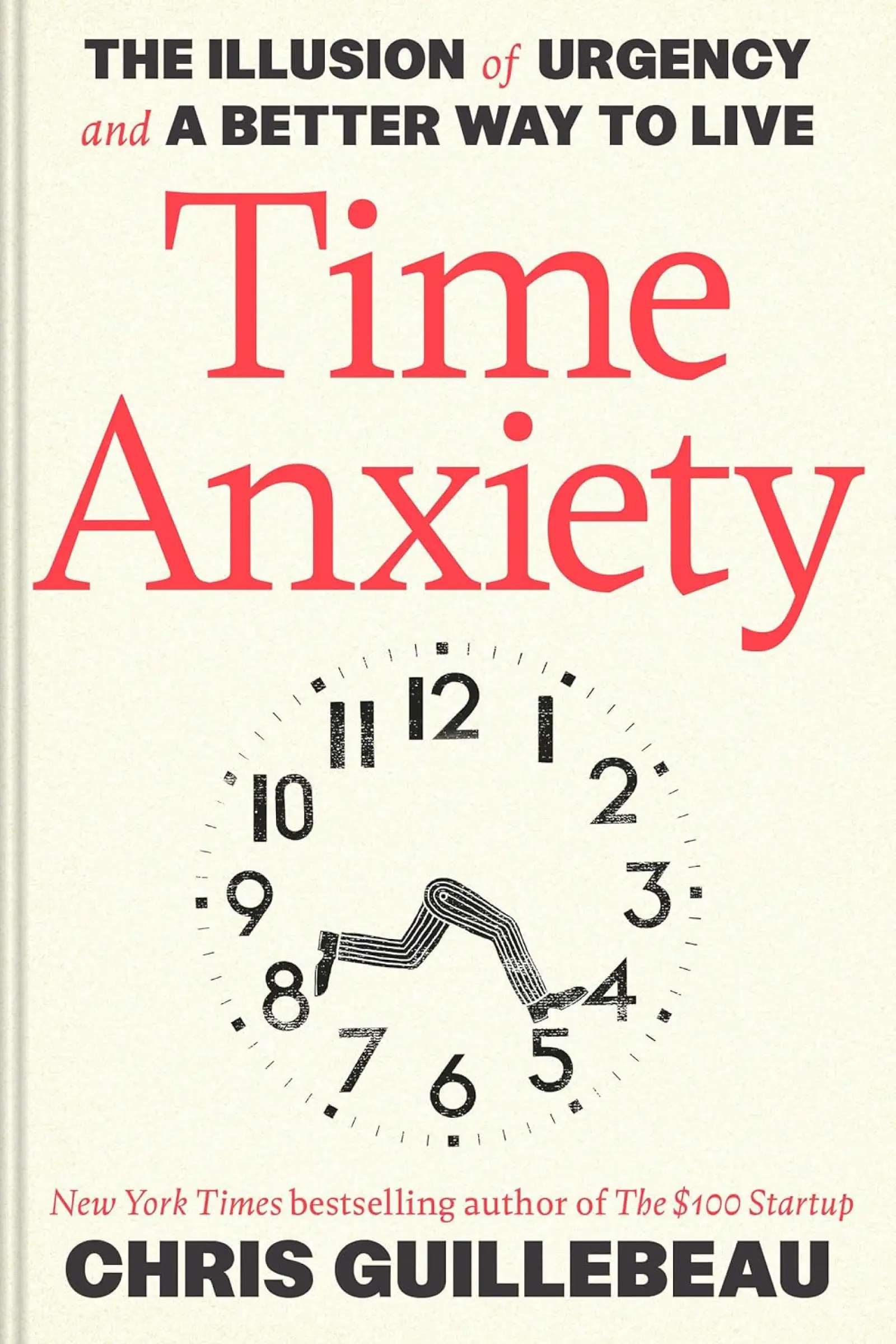
Cognitive Distortions is one of twenty short chapters in Time Anxiety: The Illusion of Urgency and a Better Way to Live. The full version develops each distortion with longer worked examples, explains why catastrophizing tends to compound around time specifically, and connects it to the framework built across the rest of the book.
Get the book →