You've been thinking about it for a while. Maybe months. Maybe years. The career change, the move, the conversation you've been avoiding, the project you've been putting off. And every time you get close to doing something about it, a voice in your head says the same thing: It's too late.
Too late to switch fields. Too late to go back to school. Too late to start a business, leave the relationship, learn the skill, make the leap. You should have done this five years ago. Ten years ago. In your twenties. Before you had kids. Before the mortgage. Before everything got so complicated.
That voice is very convincing. It's also, almost always, wrong.
Where "too late" comes from
The fear of "too late" is one of the loudest expressions of time anxiety. It works like this: your brain takes a real fact (time is limited) and draws a false conclusion (therefore it's too late for this specific thing). It treats difficulty as impossibility. It treats "harder now" as "impossible now."
There's a name for this in psychology: catastrophizing. It's the cognitive distortion where your mind takes a situation and jumps straight to the worst-case interpretation. Not "this will be challenging" but "this will never work." Not "I'm starting later than I wanted" but "I've missed my window entirely."
It sounds like this:
- I'm 35 and I still don't know what I want to do. It's too late to figure it out.
- Everyone my age is settled. I'm still floundering.
- I should have started this years ago. What's the point of starting now?
Each of these thoughts has the same structure: a feeling (I'm behind) dressed up as a fact (it's over). But feelings aren't facts. They're signals. And this particular signal is worth examining instead of obeying.
The invisible timeline
Part of why "too late" feels so real is that you're measuring yourself against a timeline that doesn't actually exist. It's the same phantom schedule that makes you feel behind in life: graduate by 22, career by 28, married by 32, house by 35. Nobody ever signed this contract. Nobody agreed to these terms. But most of us absorbed them anyway, from our parents, our peers, our culture.
When your life deviates from the timeline—when you're 40 and still figuring it out, or 50 and starting something new—the conclusion feels automatic: you're too late. But too late for what? For a schedule you didn't write? For a deadline that nobody actually set?
The timeline is a fiction. Your life doesn't follow someone else's plot.
What "too late" is really protecting you from
Here's something I've noticed about the "too late" fear: it often isn't really about time. It's about risk.
Saying "it's too late" is a way to let yourself off the hook. If the window has closed, you don't have to try. You don't have to face the possibility of failing, of looking foolish, of discovering that the thing you've been dreaming about isn't what you expected. "Too late" feels like a locked door. In reality, it's a door you haven't tried opening because you're afraid of what's on the other side.
That's not a criticism. Fear of failure is human. But it helps to name what's happening. The question isn't "Is it too late?" The question is "Am I willing to try, even though it's scary and I don't know how it will turn out?"
Those are very different questions.
Where does your time anxiety show up most?
Take a 2-minute quiz to discover your pattern—big-picture worries, daily overwhelm, or both.
Take the QuizNo one ever says "I wish I'd made that change later"
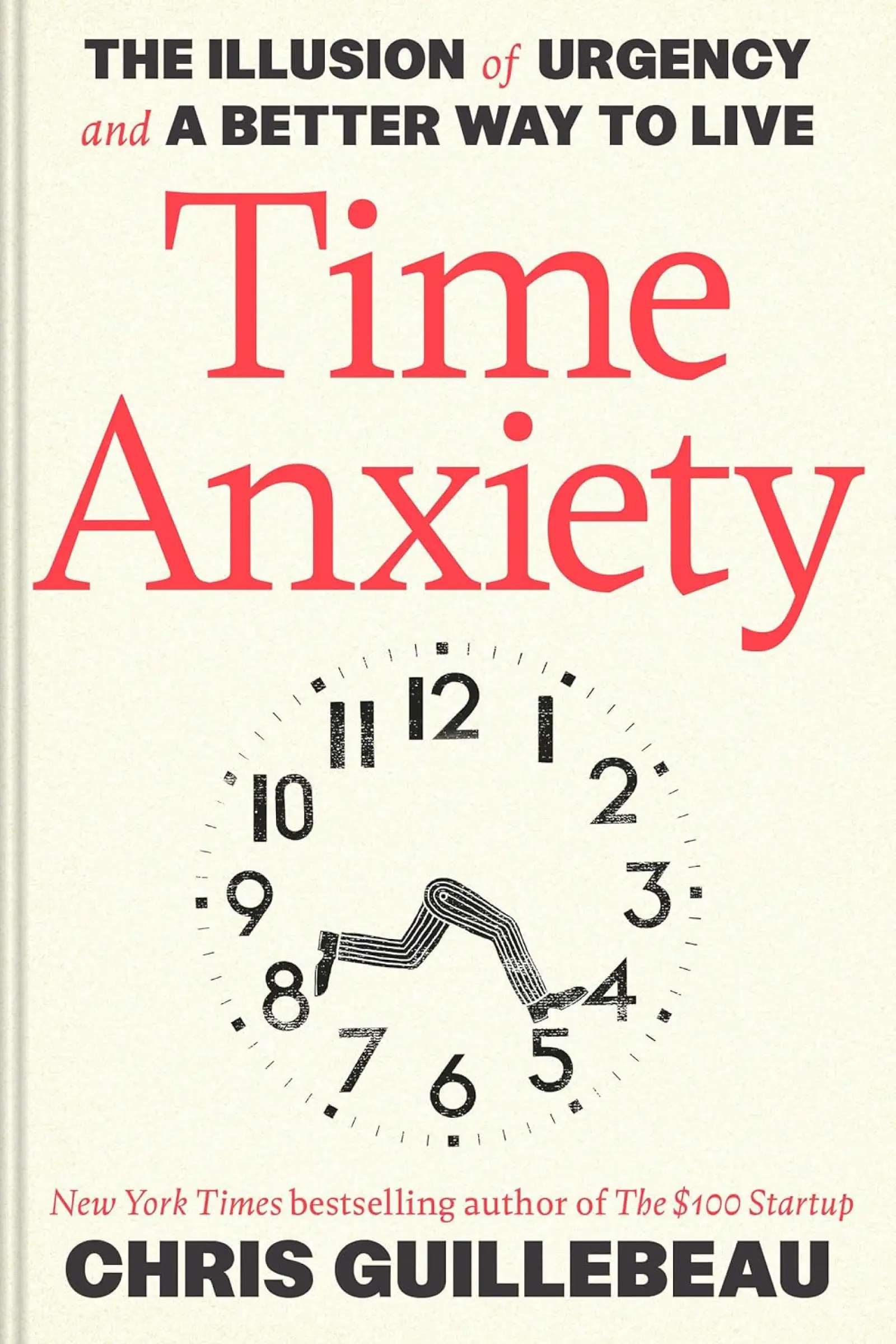
That line is from the book's manifesto, and I keep coming back to it because it's so plainly true. Think about the changes you have made in your life—the ones that felt scary at the time. Did you ever, afterward, wish you'd waited longer? Probably not. The regret almost always flows in one direction: I wish I'd done it sooner.
Which means the "too late" fear has it exactly backward. The risk isn't starting now. The risk is waiting. Every year you spend wishing you'd started is a year you could have been learning, growing, building. You overestimate what you can accomplish in a day and underestimate what can happen in a year. Give yourself a year. See what happens.
Starting over isn't what you think it is
"Starting over" sounds like erasing everything and going back to zero. That's not what it is. Nobody starts from scratch. You're carrying every experience you've had, every skill you've built, every lesson that came from the things that didn't work out. A career change at 40 isn't the same as entering the workforce at 22. You know things now. You have judgment, taste, patience. That's not nothing.
Starting over is really just changing direction. And you can change direction from wherever you are.
Start small. You don't need to quit your job tomorrow. You need to take one step. Sign up for the class. Send the email. Write the first page. Do it badly if you have to—a bad first draft is infinitely closer to done than a perfect plan you never execute.
Give yourself permission to be a beginner. Being new at something in your 30s, 40s, or 60s feels embarrassing only because you've internalized the idea that you should already know how. You shouldn't. Nobody is born knowing anything. Beginners are allowed at every age.
If you're reading this and wondering if it's too late for the thing you've been thinking about—it almost certainly isn't. The voice that says "too late" is loud, but it's not smart. It doesn't know your future. It just knows your fear. And fear is a terrible calendar.