It usually hits at night. You're in bed, and instead of sleeping, you're doing the math. How old are you? How old will you be in ten years? How many summers do you have left, roughly? You don't want to think about it, but your brain won't stop.
Or it hits on a birthday. Not a milestone one—any birthday. The day itself is fine. People are nice. But underneath the cake, there's a feeling like sand running through your fingers, and no amount of celebrating makes it stop.
Or it's simpler than that. It's Tuesday. You're in traffic. And out of nowhere: time is running out and I'm not doing anything about it.
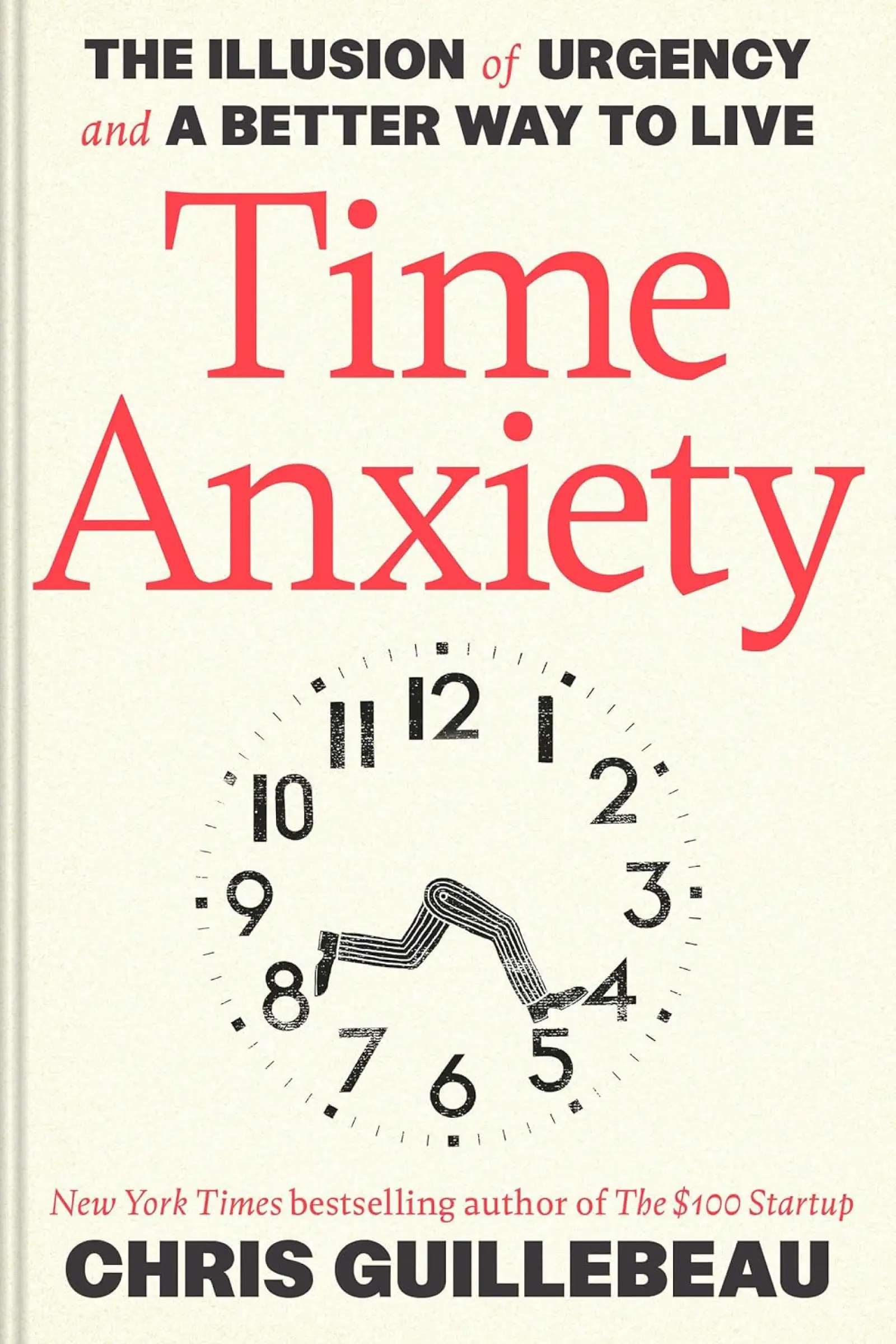
If that sounds dramatic, it's not. Or rather, it is—but it's also incredibly common. Most people don't talk about it. They assume it's just them being morbid, or anxious, or ungrateful. But it has a name. It's called time anxiety, and the "running out" feeling is its deepest layer.
It's not irrational
Here's the uncomfortable part: the feeling that time is running out isn't wrong. It is. Every day you're alive, you have less of it than you did yesterday. That's not pessimism. It's just math.
The problem isn't the awareness. The problem is what your brain does with it.
Instead of treating mortality as a background fact—like gravity, or weather—your mind turns it into an emergency. It catastrophizes. You don't just have limited time; you've wasted most of it. You're not just getting older; you're running out. Every idle afternoon becomes evidence of failure. Every year that passes without the big accomplishment is a year lost.
This is what catastrophizing about time looks like:
- Past: I wasted my twenties. I should have started sooner.
- Present: I'm not doing enough right now. Something needs to change.
- Future: It's going to be too late. I'll look back and regret all of this.
All three tenses, all at once. Your brain is running a simultaneous regret-and-dread operation, and the result is paralysis—the very thing you're afraid of.
Why time speeds up
There's a reason this feeling gets worse as you get older, and it's not just because you have fewer years ahead. It's about how your brain records time. (For a full breakdown, see why time feels like it's going so fast — the short version is below.)
When you're young, everything is new. Your first day of school. Your first kiss. Your first apartment. Each new experience gets encoded as a distinct memory, and when you look back, those years feel long and full. A single summer at age 12 contained more novelty than some entire years of your adult life.
But as you age, routines take over. Your brain stops recording the commute, the Tuesday meeting, the hundredth trip to the grocery store. Fewer new experiences means fewer memory markers. And when you look back at a year with few markers, it feels like it went by in a flash.
So when people say "where did the time go?"—that's not just nostalgia. Your brain literally has less footage to review. The years aren't shorter. Your memory of them is.
Which means the solution isn't to panic about lost time. It's to create more of what your brain actually remembers: novelty, presence, things that break the routine.
How does time anxiety show up in your life?
Take a 2-minute quiz to see whether you lean toward big-picture worries, daily overwhelm, or both.
Take the QuizTwo things this feeling makes you do
The "running out of time" feeling tends to push people in one of two directions. Sometimes both at once.
The first is paralysis. You have so many things you want to do, and so little time left (or so it feels), that you can't pick one. Every choice carries the weight of all the choices you're not making. So you freeze. You scroll your phone. You put it off. And then you feel guilty about putting it off, which makes the running-out feeling worse.
The second is frenzy. You try to do everything at once. You overschedule, overcommit, fill every gap. You say yes to things you don't want to do because what if that was the thing that mattered? Your calendar is packed, your body is exhausted, and you still feel like you're not doing enough.
Paralysis and frenzy look like opposites. They're not. They're both responses to the same fear: that you're going to run out of time before you figure out what your time was for.
What actually helps
You can't add more time. You can't slow it down. But you can change how you relate to the fact that it's limited.
Stop avoiding the countdown. The fear of running out of time gets its power from being unexamined. When you avoid thinking about mortality—when you push it away every time it surfaces—it doesn't go away. It just runs the show from the background. The people who report the most peace with time aren't the ones who've forgotten they're going to die. They're the ones who've faced it and decided to live anyway.
Notice what's special about today. This is a practice from the book, and it's deceptively simple: at the end of each day, identify one thing that made today different from yesterday. Not extraordinary. Just different. It forces your brain to pay attention, and it creates the memory markers that make time feel full instead of fast.
Accept that you can't do everything. This is the hardest one. Time is limited, but desire is limitless. You'll always want to do more than you can. That's not a problem to solve—it's a fact to accept. Once you stop trying to fit everything in, you can start choosing what actually matters. And choosing is the opposite of running out.
There is not time for everything. But there is still time for so much. The clock is ticking—it always has been. The question is whether you spend your remaining time panicking about the ticking, or whether you let it remind you to pay attention to the life that's happening right now.