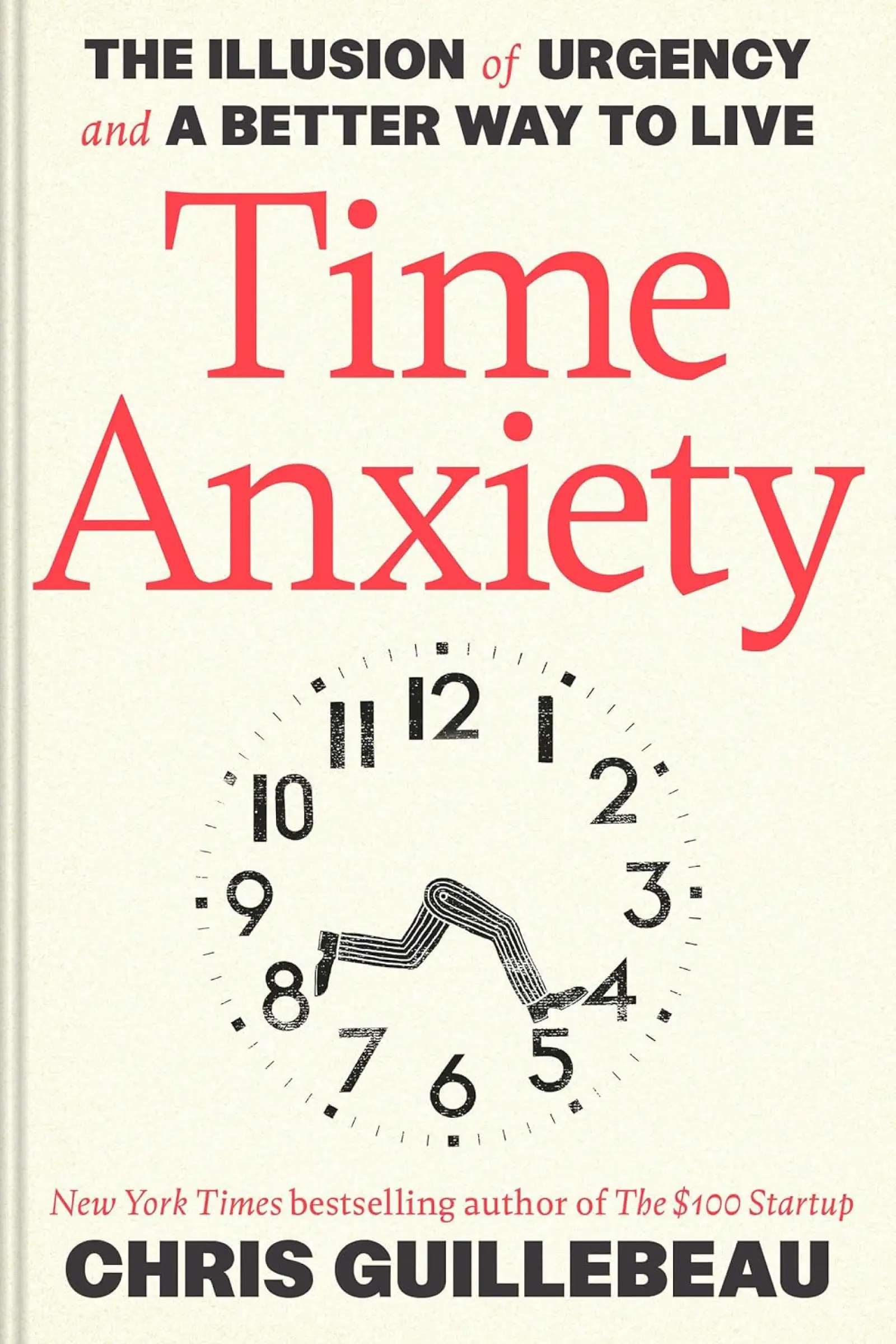
Sunday evening. You're doing something you enjoy—watching a show, cooking dinner, sitting outside—and you feel it creeping in. Not a specific worry. Just a weight. Tomorrow is Monday. The emails are piling up. The week ahead looks impossible. You haven't even started yet and you're already behind.
By Monday morning, it's confirmed. You open your laptop to 43 new emails, two meeting invites that conflict, a Slack thread you were tagged in overnight, and the project you swore you'd finish last week sitting untouched. The to-do list has grown since Friday. You haven't gotten slower. The work just never stops coming.
This is time anxiety in its most concentrated form: the workplace version. And it's different from the big-picture, existential kind. Work time anxiety is relentless and specific. It's not "am I spending my life well?" It's "how am I going to get through today?"
The inbox never empties
Here's the thing nobody tells you at any point in your career: you will never catch up. The inbox is not a task that gets completed. It's a river. It flows whether you're standing in it or not. You can process a hundred emails today and wake up to fifty more tomorrow. You can clear your calendar and it refills itself. The work regenerates.
The psychic distress of always feeling behind is real. I know because I've lived it. Time anxiety was a constant companion, even in the midst of good work. If I traveled to a place I enjoyed, if I did something fun—wherever I was and whatever I was doing, it was always looming. How could I catch up? I wondered, over and over. Once in a while I managed to get current on most things, but the rare feeling of "inbox zero" didn't last.
If this sounds familiar, it's not because you're bad at your job. It's because modern work is designed to produce more tasks than any person can complete. You're playing a game that can't be won, and then feeling guilty about the score.
Your work time rules
Work time anxiety gets worse when you're living by rules you've never examined. These are the invisible beliefs about how a "good worker" should behave:
- I should respond to emails the same day they arrive.
- If I leave on time, people will think I'm not committed.
- I need to be available at all hours in case something comes up.
- I can't take a break until I've finished everything on my list.
- Being busy means I'm doing well. Having free time means I'm slacking.
Where did those rules come from? Some might be real expectations from your boss. Most aren't. Most are stories you've absorbed from the culture of your workplace, your industry, your upbringing. And almost all of them, taken to their logical conclusion, lead to the same place: burnout.
The rule "I can't take a break until I've finished everything" is particularly insidious, because the work is never finished. Which means, under that rule, you never get a break. Not because someone's forcing you to work—but because you've written yourself an impossible contract and then feel guilty for not honoring it.
Where does your time anxiety show up most?
Take a 2-minute quiz to see whether you lean toward big-picture worries, daily overwhelm, or both.
Take the QuizBusy isn't the same as productive
There's a specific trap that work time anxiety sets: it makes you confuse motion with progress. You spend all day responding, attending, updating, following up. You were busy. Your calendar was full. But at the end of the day, you can't point to a single thing you actually moved forward.
That's because the illusion of urgency is strongest at work. Every email feels like it needs a reply now. Every Slack message feels time-sensitive. Every meeting feels mandatory. Your day gets hijacked by what's loudest, not what's most important. And the things that actually matter—the deep work, the creative thinking, the strategic decisions—get pushed to "later," which never comes.
This isn't a time management problem. You don't need a better system. You need to notice that the system itself is the problem—a workplace culture that rewards responsiveness over thoughtfulness, and visibility over impact.
What to do about it
Accept the brick. There's a concept I write about in the book called the "brick in your inbox." Imagine someone drops a literal brick on your desk. It sits there. It doesn't do anything. It's not a task you can complete or a problem you can solve. It's just... there. Now imagine that some percentage of your emails, messages, and tasks are bricks. They showed up, but they don't need your attention. The hard part isn't handling them. It's letting them sit there without feeling guilty.
Protect your first hours. The morning—or whenever your brain is sharpest—is the most valuable time you have. Most people donate those hours immediately to email and meetings. Instead, try blocking off the first 60 to 90 minutes of your day for the work that actually matters. Not urgent stuff. Important stuff. The email can wait an hour. It won't feel comfortable at first. Do it anyway.
Leave on time. This sounds absurdly simple, but for many people it's the hardest thing on this list. The work isn't done? It won't be done tomorrow either. Leave anyway. Your time outside of work isn't a reward you earn by finishing—it's a need that exists whether the inbox is empty or not. (The inbox won't be empty. Leave anyway.)
Question the meeting. Before accepting your next meeting invite, ask: what decision will this meeting produce? If there's no clear answer, it probably doesn't need to happen—or it doesn't need you. The cultural expectation that attendance equals contribution is one of the biggest time sinks in modern work.
Work time anxiety wants you to believe that you could catch up if you just worked harder, stayed later, responded faster. You can't. And that's not a failure—it's a fact about how modern work is structured. The freedom starts when you stop trying to win an unwinnable game and start choosing, deliberately, what deserves your time today. Not everything. Just the things that matter.