You said it again this morning. Maybe out loud, maybe in your head. How is it already May? Wasn't it just January?
The seasons used to feel longer. Summers had texture. A single school year took forever to grind through. Now you blink and the year is half gone, and you can't account for any of it.
This isn't a personal failing. It isn't proof that you're wasting your life. There's a reason time feels like it's going faster, and once you understand what your brain is doing, the feeling stops being a mystery — and starts being something you can work with.
The clock hasn't sped up. Your memory has thinned.
Time itself doesn't change pace. A second is a second whether you're 8 or 80. What changes is how much of it your brain bothers to record.
Your sense of how long a year was is built from how many distinct memories you formed inside it. A year of firsts — first kiss, first car, first apartment, first heartbreak — gets encoded in high resolution. When you look back, it feels long because there's a lot of footage. A year of Tuesdays — same commute, same meetings, same dinner — gets encoded as one blurry montage. When you look back, it feels short because there's almost nothing to review.
That's the core mechanism. The passing of time isn't accelerating. Your memory of it is compressing.
The proportional theory: why time flies so fast at 40 and not at 4
There's a second theory that explains why this gets worse with age, and it's almost embarrassingly simple. Each new year is a smaller fraction of the life you've already lived.
When you're 4 years old, a single year is 25% of your existence. It's enormous. When you're 40, a year is 2.5%. It's a sliver.
One year, as a share of your life so far. The bar shrinks because the denominator keeps growing.
This idea is sometimes called the proportional theory of time perception, and it was first floated by the philosopher Paul Janet in the 1800s. It doesn't fully explain everything — humans don't experience time as a pure mathematical ratio — but it captures something real. The reference frame keeps expanding, so each unit feels smaller against it.
Add the memory effect on top of the proportional effect, and you have a brain that's quietly conspiring to make every year feel shorter than the last.
Why time goes by so fast when you're busy
Here's the counterintuitive part. You'd think a packed life would feel long. It doesn't. Often, the opposite.
Busy and full aren't the same thing. Busy usually means repetitive — back-to-back meetings, an inbox that refills itself, the same kind of task on loop, attention split across a dozen tabs. None of it is novel. Almost none of it gets encoded. You finish a packed week and can't remember what you did on Wednesday.
Full is different. Full is what you get from a Saturday spent doing something you'd never done before, in a place you'd never been, with someone you don't see often. Full leaves marks. Busy leaves a smear.
This is why people who travel for a week often report that the trip felt like a month, while the month before the trip vanished. The trip was full. The month was busy.
How does this feeling show up in your life?
Take a 2-minute quiz to see whether the fast-time feeling lands as big-picture dread, daily overwhelm, or both.
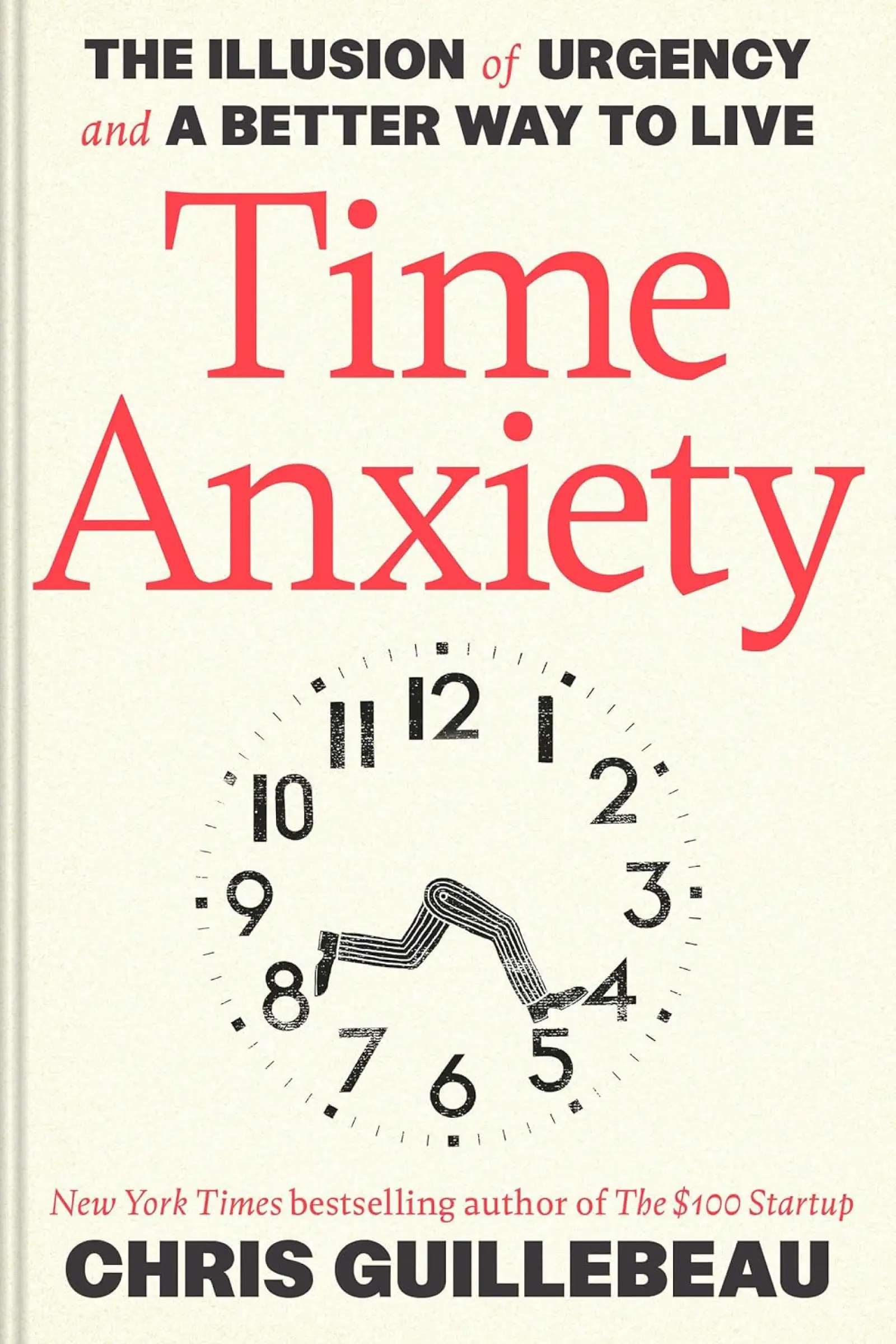
Take the Time Anxiety TestThe fear of time passing — and why it's so hard to talk about
So far this has been an explanation. But the reason you're reading this isn't curiosity. It's something more uncomfortable.
Underneath "where did the year go?" is a quieter question: am I running out of it?
The fear of time passing has a name. It's a core piece of what I call time anxiety — the persistent, low-grade dread that the clock is ticking down and you're not spending what's left of it well. It shows up in small moments. A birthday. A friend's milestone you haven't matched. A 2 a.m. calculation about how many summers you have left.
This feeling isn't wrong. Time is moving too fast in a literal sense — you have less of it today than you did yesterday. The discomfort isn't a glitch. It's a signal.
The mistake is in what you do with the signal. Most people do one of two things:
- Push it away. Stay busy enough that you never have to sit with the awareness. The feeling doesn't go anywhere; it runs the show from the background.
- Catastrophize it. Treat every year as proof that you've already missed your window. Turn finite time into a verdict instead of a fact.
Neither works. The first leaves the dread in charge. The second turns it into paralysis.
What slows the feeling down
You can't slow time. You can change how much of it your brain records, and you can change how you relate to the fact that it's finite. Both help.
Break the routine — on purpose. Your brain encodes novelty. So introduce it. Take a different route home. Eat at a restaurant you've never tried. Visit a friend you haven't seen in years. The point isn't to maximize new experiences as a productivity hack — it's that a single distinct day creates more memory than a week of repetition.
Mark the days that matter. At the end of each day, identify one thing that made today different from yesterday. Not extraordinary. Just different. This is a deceptively small practice with an outsized effect: it forces your brain to record, and over time it gives you back the sense that your years contain something.
Stop avoiding the countdown. The fear of time passing gets its power from being unexamined. People who report the most peace with time aren't the ones who've forgotten they're going to die. They're the ones who've faced it and decided to live anyway.
Accept that you can't do everything. Time is limited; desire isn't. You'll always want to do more than you can. That's not a problem to solve. It's a fact to build a life around. Once you stop trying to fit everything in, you can start choosing what matters. And choosing is the opposite of running out.
How fast time flies isn't the real question. The real question is what you do with the awareness that it does.
The clock isn't a threat. It's a reminder. The years won't slow down on their own — but you can choose what to put in them, and you can choose what to notice while you're here. That's most of the work.